There is a quiet trap in grant hunting: the biggest number wins. You scan a list, spot the largest dollar figure, and start writing. Months later you learn you were never eligible, or that the “grant” is actually a repayable loan, or that you had to spend the money first and wait a year to be paid back.
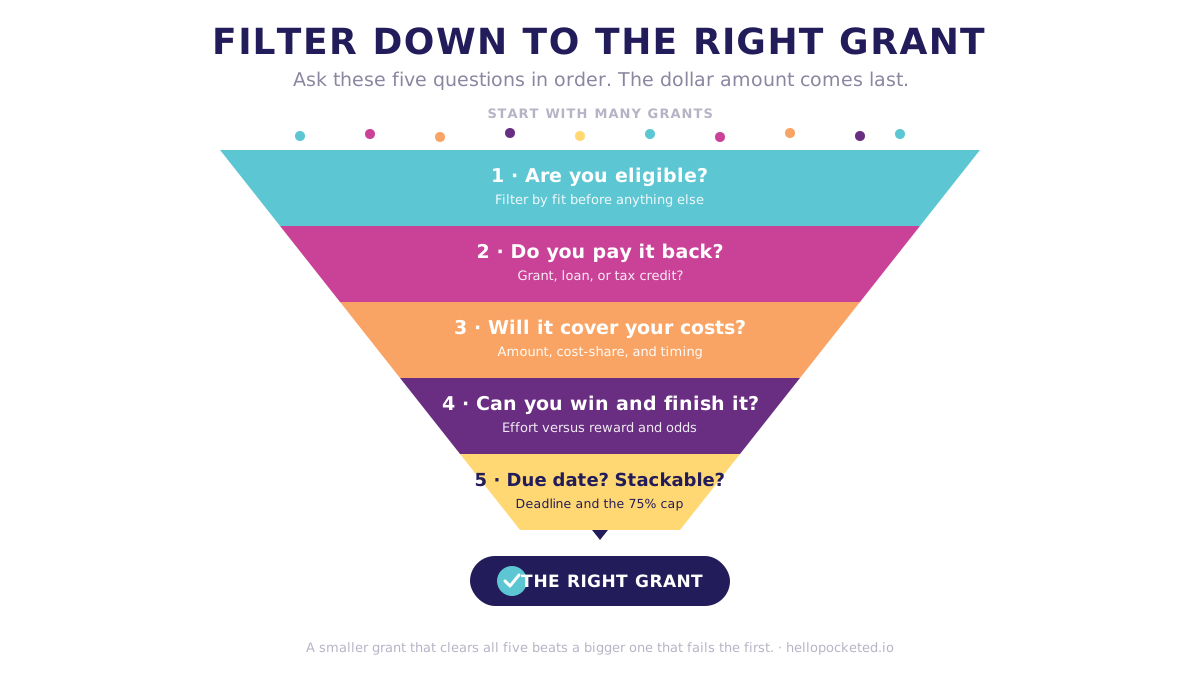
Choosing well is less about finding the biggest grant and more about filtering, in the right order, down to the one you can actually win and use. Here are five questions to ask, arranged in the order that saves you the most wasted effort. You will notice the dollar amount is not the first one.
Table of Contents
1. Are you actually eligible?
Start here, always, because this is where most applications quietly die. Before anything else, read the eligibility criteria and check yourself against them honestly: your business structure (incorporated or not), your size, your stage, your location, your industry, and crucially, what the money is allowed to be spent on.
That last point trips people up. A grant might look perfect until you notice it only funds net-new hires, or capital equipment, or projects that have not started yet. If your plan does not match what the program funds, no amount of polish on the application will save it. Five minutes spent confirming fit can save you forty hours of writing.
2. Do you have to pay it back?
This is the question the word “grant” hides, and it matters enormously. Not everything labelled a grant is free money. Across Canadian programs, only about two-thirds are truly non-repayable. The rest are loans, forgivable loans, or tax credits, each with very different strings.
A true grant or a refundable tax credit like SR&ED, which returns up to 35% of eligible R&D as cash, is money you keep. A repayable contribution like AgriInnovate is closer to a low-cost loan, useful, but it comes off your balance sheet eventually. Neither is bad, but you should know which one you are signing before you commit, not after. If keeping the cash matters more than the size of the award, weight your search toward non-repayable programs first.

3. Will it actually cover what you need?
Now you can look at the money, and look at it properly. Two numbers matter more than the headline award.
First, the cost-share. Most programs cover a percentage of your project, not all of it. If a grant covers 50% of a $40,000 project, you need a plan for the other $20,000, whether that is your own capital, another program, or a founder loan. Second, the eligible costs. Programs reimburse specific expense categories, so confirm your actual spend qualifies before you count on the money.
And watch the timing. Many programs reimburse you after you have paid the expense, sometimes months later. That is a cash-flow reality, not a detail. A grant that pays out in arrears still requires you to front the cash, so make sure you can.
4. Can you realistically win it, and finish the application?
Be honest about effort and odds. Applications vary wildly in the work they demand. A Canada Summer Jobs application might take a few hours, while a full IRAP application can run 40 to 80 hours of preparation, and federal approval rates across programs generally sit somewhere around 35 to 45%. A big award you have a slim chance of winning, after eighty hours of work, can be a worse bet than a smaller one you will almost certainly land in an afternoon.
So weigh the prize against the effort and your honest capacity. If a large, complex grant is genuinely worth it but you do not have the time or the stomach for the paperwork, that is a fine reason to bring in a grant writer rather than to skip it. Just make the call deliberately instead of starting a marathon application you will abandon at week three.
5. When is it due, and will it stack?
Two timing questions close this out. The first is the deadline. Some programs run on fixed intakes with hard cutoffs, others are first-come, first-served until the money runs out. If you are in a hurry, a rolling program you can submit today may beat a larger one that does not open again until next spring.
The second is stacking, which is where real funding strategy lives. You can usually combine multiple programs on one project, but most cap the total. As a rule of thumb, combined government assistance from all sources cannot exceed 75% of your eligible project costs, you cannot claim the same expense twice, and you must disclose every other source of government funding you have received or applied for. There is also interaction to watch: a grant you receive typically reduces the expenses you can later claim under SR&ED. None of this is a reason to avoid stacking, which is how the savviest companies fund themselves, but it is a reason to map your programs to separate costs and keep everything above board.
Putting it together
Run a candidate grant through these five questions in order and the right choice usually becomes obvious. Eligible, non-repayable, covers a real cost, winnable for reasonable effort, open in time, and stackable with the rest of your plan. A smaller grant that clears all five beats a larger one that stumbles on the first.
This is also the kind of filtering Pocketed is built to do for you. The matching platform shows you the award amount, the type, the deadline, and the application effort side by side, so you can compare on what matters instead of guessing. And if you are just getting started, our 3 Easy Grants to Apply for in 2026 is a low-stakes place to practice the process.