Digital and tech roles are one of the easiest places to land a hiring subsidy, because so much government funding is built specifically to grow Canada’s digital workforce. A good chunk of a developer, data analyst, or digital marketer’s salary can be covered, sometimes most of it.
The catch is that the money comes with rules, and the rules are mostly about two things: who you hire and how you set up the role. Get those right and the funding follows. Here are five tips to do exactly that, with the programs that back them up.
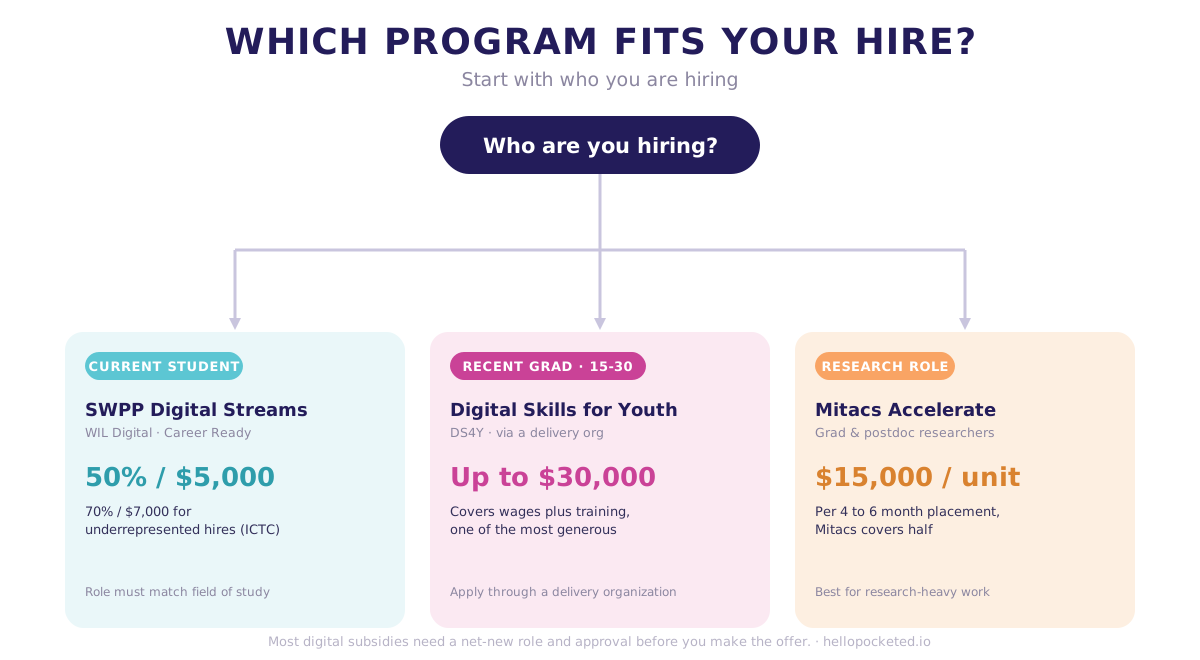
A quick map of the programs: For current post-secondary students in digital roles, the Student Work Placement Program runs through tech delivery partners like ICTC’s WIL Digital and TECHNATION’s Career Ready, covering 50% of wages up to $5,000. For recent graduates aged 15 to 30, Digital Skills for Youth goes up to $30,000 per hire. Keep both in mind as you read.
Table of Contents
Tip 1: Match the program to who you are actually hiring
The single biggest mistake is chasing a program your candidate does not fit. The dividing line is simple: are they still in school, or done?
If you are hiring a current post-secondary student, you want the SWPP digital streams (WIL Digital or Career Ready). The placement has to line up with their field of study, and the subsidy is 50% of wages to $5,000. If you are hiring a recent graduate, that is Digital Skills for Youth territory, which is more generous at up to $30,000 but is accessed through a funded delivery organization rather than a direct application. And if the role is genuinely research-heavy, a graduate researcher through Mitacs may fit better than either.
Decide who you are hiring first, then pick the program. Doing it the other way around wastes everyone’s time.
Tip 2: Put the "digital" in the job description, on purpose
This one is not just good practice, it is an eligibility requirement. WIL Digital and Career Ready both require the job description to clearly show the digital or technical nature of the role: the tools, platforms, and software the person will actually use.
So before you post, look hard at the role. If it has a real digital component, name it explicitly. If it is borderline, you can often reshape it to lead with the digital work, which both qualifies you for funding and attracts the candidates you want. A vague posting that buries the tech reads as ineligible to a reviewer, even when the work itself would have counted.
Tip 3: Hire inclusively, and unlock the bigger subsidy
Here is a number worth knowing. Through ICTC’s WIL Digital, hiring a student from an underrepresented group raises the subsidy from 50% to 70%, and the cap from $5,000 to $7,000. That list includes women in STEM, Indigenous students, students with disabilities, recent immigrants, visible-minority students, and first-year students.
That is a meaningful difference on a single hire, and it points your recruiting toward talent pools that are too often overlooked anyway. It is the rare case where the inclusive choice and the financially smart choice are the same one. (Note that this higher tier is program-specific. ICTC offers it; some partners, like TECHNATION, do not, so check before you count on it.)

Tip 4: Build eligibility into your hiring workflow, carefully
You can save real time by screening for the grant’s basic criteria inside your application, rather than discovering at offer stage that your top candidate does not qualify. Useful questions confirm things like current enrollment, program of study, and eligibility to work in Canada.
Two cautions, though. First, most of these subsidies require a net-new role, meaning you are growing your headcount, not backfilling a departure, so confirm that applies to your hire. Second, any question touching the underrepresented categories from Tip 3 has to be a voluntary self-identification, kept separate from the hiring decision, and your screening generally should be reviewed by an HR or legal professional to stay onside of human-rights law. The funding is not worth a discriminatory hiring process, so get the wording right.
Tip 5: Move on the calendar, and get approval before you offer
Timing makes or breaks these. The SWPP digital streams run in seasonal intakes (winter, summer, and fall) with their own deadlines and limited, first-come-first-served funding. The Summer 2026 WIL Digital deadline, for example, is July 15, 2026. Miss the window and you wait a season.
Two rules keep you out of trouble. Secure your approval before you make the offer if the role depends on the subsidy, because funding is not guaranteed until it is confirmed. And do not double-dip: you generally cannot stack two federal wage subsidies on the same position, so pick the best single fit. When you post, start where eligible candidates actually are. University and college co-op offices are the most direct line to enrolled students, and tech-specific channels like Stack Overflow and Wellfound reach the rest.
Where this leaves you
Hire the right person, write the role honestly, screen with care, and move with the calendar. Do those four things and the funding for digital talent is very gettable.
If you would rather not track every intake and eligibility rule yourself, that is the job Pocketed does. Our matching platform flags the hiring programs you qualify for, and for the bigger picture, our Ultimate Guide to Hiring Grants covers everything beyond digital roles.